Okay, so check this out—browser extension wallets get a bad rap sometimes. Wow! They’re the obvious target for phishing and scams. But they’re also the fastest, most convenient gateway to DeFi on Ethereum and other chains. My instinct said they’d be too risky for everyday use, and at first I treated them like a no-go. Initially I thought only hardware wallets were worth trust, but then I started using extensions as part of a layered approach and realized they can be both powerful and relatively safe when you know what to watch for. Hmm… there’s a lot to unpack here.
Short version: extension wallets are the best blend of UX and on-chain control for many users. Longer version: you need habits and the right toolset. Seriously? Yes. On one hand you want frictionless swaps and yield farming, though actually you also want to avoid losing your funds to a careless click or a malicious signature request. This piece walks through practical tactics, the trade-offs between extensions and other wallet types, common attack vectors, and how to pick a wallet that fits your threat model.
First, a quick confession—I’m biased toward wallets that give clear, granular controls over approvals and transactions. That part bugs me when wallets hide approvals behind “Confirm” buttons. I’ll be honest: I once nearly signed a malicious approval because the UI hid critical details. Ever since, I read every line of a signature request even when I’m rushing. You should too. Somethin’ like vigilance pays off.
How extension wallets fit into your DeFi toolkit
Browser extension wallets are hot because they live where the action is: your browser. They inject providers into webpages so dApps can interact with your account without complex setups. That convenience powers quick swaps, NFT marketplaces, and on-the-fly contract interactions. But convenience equals attack surface. Wow! A malicious site or a compromised extension can trick you.
So how do most people use them? The common pattern: small-to-medium value hot wallet for daily activity, paired with a colder vault or hardware wallet for savings. That balance gives you speed and safety. I’m not 100% sure this is perfect for everyone, but the model reduces single-point-of-failure risks. On the technical side, extension wallets are typically externally owned accounts (EOAs), though some newer ones layer in smart-contract account features like batching and gas abstraction.
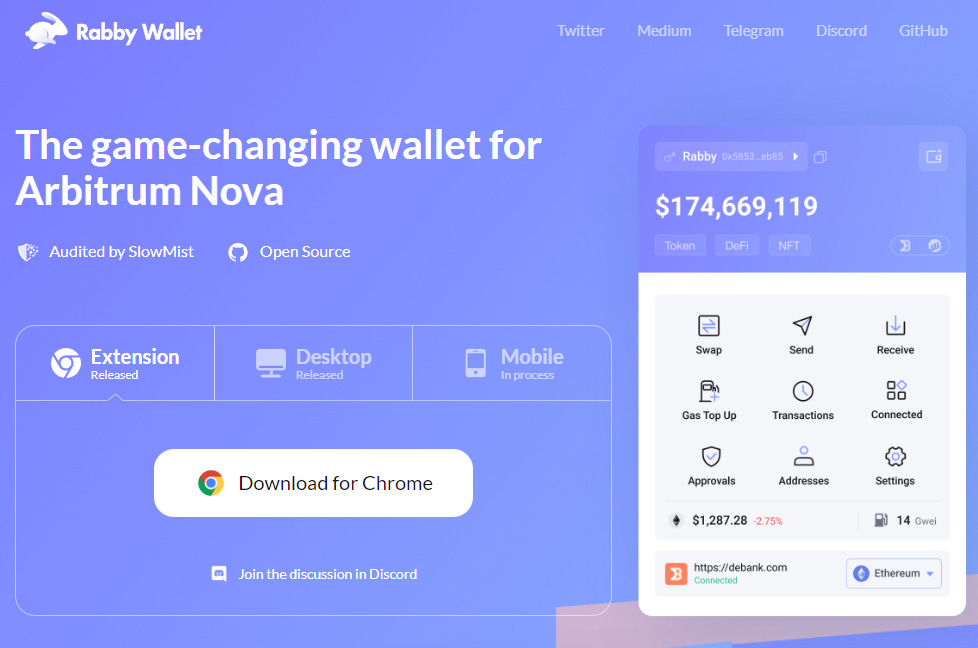
Choosing the right extension matters. Look for features like explicit transaction previews, token approval management, hardware wallet support, easy network switching, and a clean, auditable codebase. For example, rabby wallet has a strong reputation for transaction previews and granular approval controls—worth checking out if you want a hands-on wallet that surfaces risk clearly.
(oh, and by the way…) Not every feature that sounds “convenient” is safe. Auto-approvals, endless token allowances, and obscure gas estimates are red flags. I once saw a dApp ask for unchecked allowance to an obscure contract; my instinct said nope. I revoked that approval immediately and wrote it down as a rule: never give infinite approvals unless you truly trust the counterparty.
Attack vectors and how to mitigate them
Phishing is the number-one threat. Short sentence. Attackers spoof domain names, hijack social feeds, and use malicious ads to direct you to fake dApps. Always verify URLs and bookmarks. Use browser profiles and extensions sparingly—only install wallets from official stores and check the publisher’s signature or GitHub repository when in doubt. Something felt off about a popular-looking site once—turns out it was a typo-squatted domain. I wasn’t the only victim that week.
Malicious extensions are another big risk. Extensions with intrusive permissions can read or modify web pages. On one hand, you need the extension to inject a provider; on the other, you want the least privilege necessary. Keep your browser extensions minimal. Period. If a wallet claims it needs weird permissions, that’s a warning.
Contract-level risks: some dApps request you sign meta-transactions or grant token allowances that allow draining of funds. Longer thought here—read the exact method and target address. If the payload calls “approve” with max uint256 to a contract you don’t trust, don’t sign. Many wallets now show decoded calldata; choose one that does. When they don’t, open Etherscan, paste the calldata, and decode it yourself if you’re serious about security. It’s extra work but worth it.
Supply-chain risks: a compromised wallet update could push malicious functionality. Keep a hardware wallet as a fallback and consider storing only small amounts in extension wallets. Also, use OS-level protections—uBlock, script blockers, and a dedicated browser profile for crypto activity. These add friction but dramatically reduce exposure.
Practical setup and day-to-day habits
Start by setting clear roles for your wallets. Medium-length sentence. For example: a hardware wallet for long-term assets, a named extension wallet for trading, and a cold multisig for treasury-level funds if you’re running a DAO or serious portfolio. This simple classification helps you decide when to approve what.
Seed phrase hygiene is basic but often broken. Never paste your seed into a website. Never share it. Back it up offline in at least two secure places. Consider a metal backup if you’re holding significant value. I’m biased toward redundancy—two backups in different physical locations is my personal rule. Also: use passphrases (BIP39) only if you fully understand their implications; losing that passphrase is irreversible.
Fragmented advice here: use hardware wallets for high-value transactions; use extension wallets for low friction trades. But also, learn to verify transaction details. Check destination addresses, gas fees, and token amounts. If a signature request includes a permit or approval, inspect the spender and allowance amount. If anything looks ambiguous, decline. Seriously—decline and re-evaluate. It’s a small moment of friction that saves big headaches later.
Advanced controls you should expect
Good extension wallets give you: transaction previews that show method names and affected tokens, approval management so you can see and revoke allowances, support for multiple chains with clear network labels, and hardware wallet integration for signing. They also warn you about suspicious dApp behavior. The more explicit the UI, the better. On the other hand, overly simplified UIs that hide these details are dangerous—very very dangerous.
Batching and gas abstraction are nice advanced features, but only if implemented transparently. Smart-contract accounts can pay gas for users, bundle multiple calls, and enable social recovery. These are powerful, though they shift trust: you must trust the account contract code. Read audits and community reviews. If you can’t read the code, at least find reputable audits and an active developer community.
Wallet connect alternatives: mobile wallets often pair with desktop extensions. That gives you a two-device flow that’s useful for higher-value confirmations. You can use your phone to approve transactions initiated in your browser—this adds a layer of physical separation that helps mitigate in-browser compromises.
Choosing a wallet: checklist and red flags
Checklist: Does the wallet decode calldata and show method names? Can you inspect and revoke approvals? Is there hardware wallet support? Does it support the chains you use? Is the project open-source or audited? Does it have an active community and transparent team? I like wallets that answer yes to most of those items.
Red flags: automatic infinite approvals, opaque transaction details, closed-source code with no audits, pressure tactics in dApps urging you to sign quickly, or a wallet that requests more permissions than necessary. If you see any of these, pause. My rule of thumb: if it feels rushed or confusing, it’s likely engineered to exploit rushed decisions.
One more practical tip—use small test transactions when trying a new dApp. Send a tiny amount first. If that works and behavior seems normal, proceed. This tiny ritual prevents large mistakes. It’s simple and surprisingly effective.
FAQs: quick answers for the impatient
Is a browser extension wallet safe for serious DeFi?
Short answer: yes, with caveats. Extensions are safe for everyday DeFi if you follow hygiene, keep large holdings offline, use hardware keys for high-value ops, and choose a wallet with strong UX around transaction previews and approvals.
What should I do if I accidentally signed a malicious approval?
Immediately revoke the approval using an approvals dashboard (many wallets and block explorers offer this). If funds are drained, contact the dApp and community quickly—sometimes contracts can be paused, though often not. Learn from it; consider splitting funds across wallets.
Which wallet should I try?
I’m biased, but try one that emphasizes transparency and granular controls. For a hands-on, approval-focused approach that’s popular in the community, check out rabby wallet—it surfaces approvals and previews in ways that help you avoid common traps.
So where does that leave you? A browser extension wallet isn’t a shortcut to carelessness. It’s a tool—fast, useful, but potentially dangerous in the wrong hands (or with sloppy habits). If you pair the right extension with clear practices—small test txs, hardware for big moves, regular revocation of allowances—you get the best of both worlds: access and security. My gut still says stay cautious. Yet after a few years in the space, I also know that avoiding extensions entirely means missing out on a lot of DeFi innovation. Balance is the word I return to again and again… and yeah, that balance takes discipline.